Overview
You play a divine overseer watching over five ancient tribes as they grow, believe, fight, and merge. From above you nudge their religious and cultural development: tribes expand their territories, develop technologies, wage holy wars, or unite around a shared faith -; and your interventions are what tip the whole thing toward harmony or chaos. The simulation models seventeen religious parameters per tribe, so belief systems drift and diverge on their own rather than following a script.
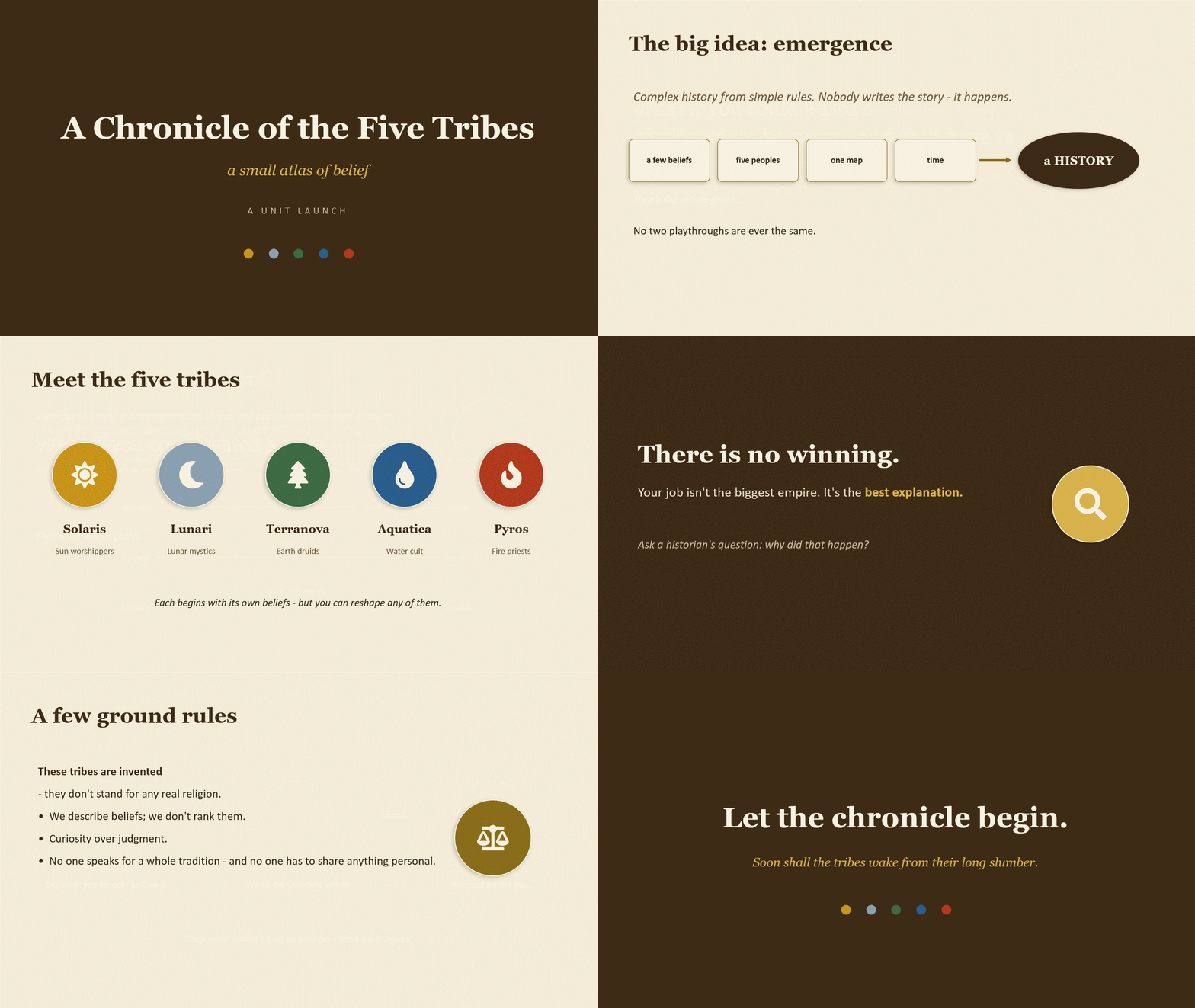
The whole thing wears an illuminated-manuscript aesthetic -; parchment-toned maps, heraldic sigils, an "Anno I" year counter, a chronicle of recent events -; inspired by medieval cartography and historical chronicles. It's built to double as a classroom unit on the evolution of religion and culture, which is why it ships with a teacher guide, a slide deck, and student printables alongside the game itself.
How It Works
The game is built in Godot 4.4 (with .NET support) on top of a simulation core that was first prototyped in Python. The map is procedurally generated terrain; five settlements are seeded onto it, the simulation starts paused, and from there you watch the tribes act while you intervene. Underneath, separate systems handle the tribes themselves, the religious parameters, the map, and the chronicle of events.
Current Status
A working Godot build with a full documentation set wrapped around it -; this one is framed as much as a teaching unit as a game.
- Five tribes, seventeen-parameter belief systems, territory expansion, tech, holy wars, and unions are all simulated.
- Complete classroom package: user manual, teacher guide, unit-launch deck, and student printables.
- Marked "exploring" -; it runs in the Godot editor; the next questions are around distribution and balance.